
Overview
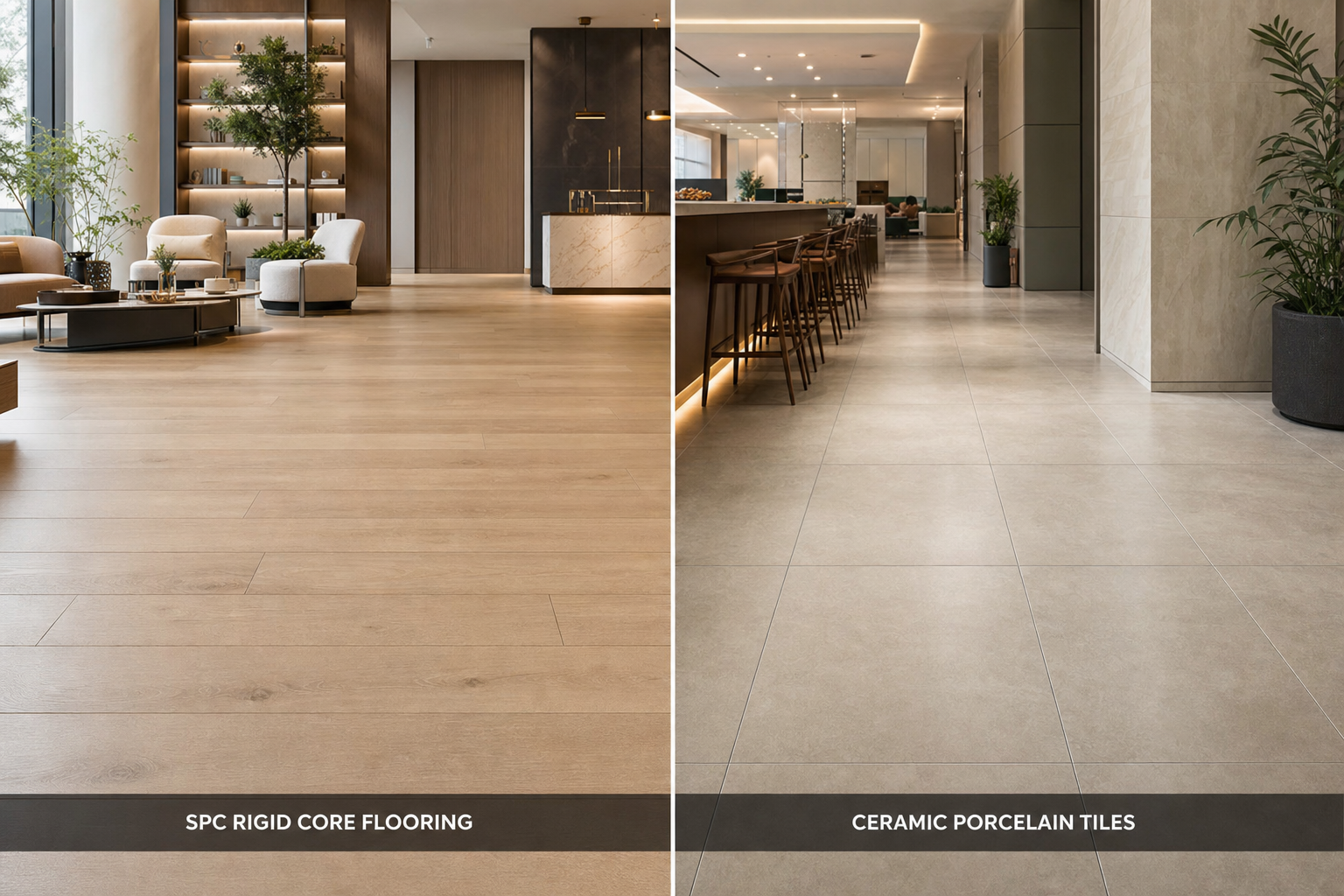
For decades, ceramic and porcelain tiles have been the default choice for waterproof flooring in kitchens, bathrooms, and commercial spaces. However, Stone Plastic Composite (SPC) flooring is rapidly replacing tile in many applications. Comparing the two materials reveals significant advantages for SPC in terms of project speed and overall cost.
Installation Speed and Cost
The most dramatic difference between SPC and ceramic tile is the installation process. Ceramic tile installation is a slow, messy, and labor-intensive wet process requiring mortar, curing time, grouting, and highly skilled tile setters. SPC flooring utilizes a dry, click-lock installation system — planks simply snap together and float over the subfloor. A professional crew can install hundreds of square meters of SPC in a single day with no mortar, no grout, and no curing time.
Comfort and Safety
Ceramic tiles are notoriously cold underfoot, requiring expensive radiant underfloor heating systems in cooler climates. SPC retains ambient room temperature and feels significantly warmer and more comfortable. Additionally, wet ceramic tiles pose a severe slip hazard, while commercial SPC flooring is engineered with textured wear layers that provide excellent traction even when wet.
Durability and Maintenance
Both materials are 100% waterproof. Ceramic tile is scratch-resistant but prone to cracking or chipping if a heavy object is dropped on it, and replacing a cracked tile is difficult. SPC is highly impact-resistant and will not crack or shatter. Furthermore, tile grout lines are porous and notorious for absorbing stains, dirt, and mold. SPC flooring is completely seamless and grout-free, making it far easier to keep clean and hygienic.