
Introduction
This guide compares common MDF-based acoustic panel constructions and fabric-wrapped acoustic panels for office interiors. MDF-based options include slatted panels with acoustic felt and perforated or grooved panels used with a specified backing assembly. Fabric-wrapped panels use an acoustically suitable textile over an absorber core; core material, frame and fixing details vary by model. For importers, fit-out contractors and project specifiers, selection should consider the room requirements, finish, maintenance, installation and applicable test documentation—not a universal ranking of material names. Acoustic results apply to the complete tested assembly, not the decorative face alone.
Three Common Acoustic Panel Constructions
Distinguish the face construction, acoustic backing and mounting arrangement before comparing products.
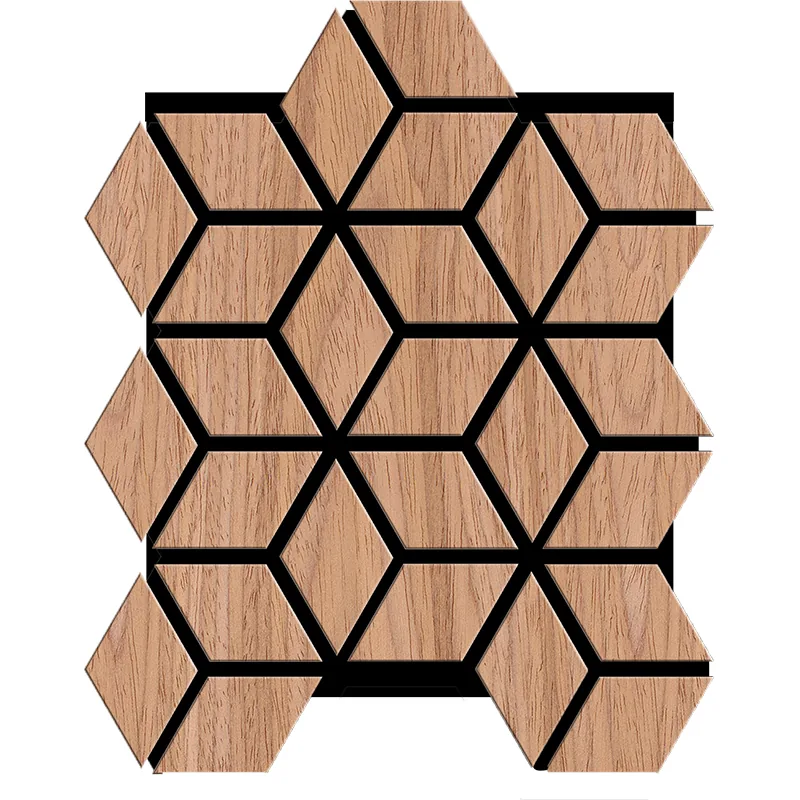
Perforated / Grooved MDF
Machined face → specified backing → cavity where required
- Machined MDF face with perforations or grooves and model-specific openings.
- Acoustic fleece, absorber and cavity arrangement vary by system; not every layer is bonded to the face.
- Confirm the finish, panel thickness and tested installation details.
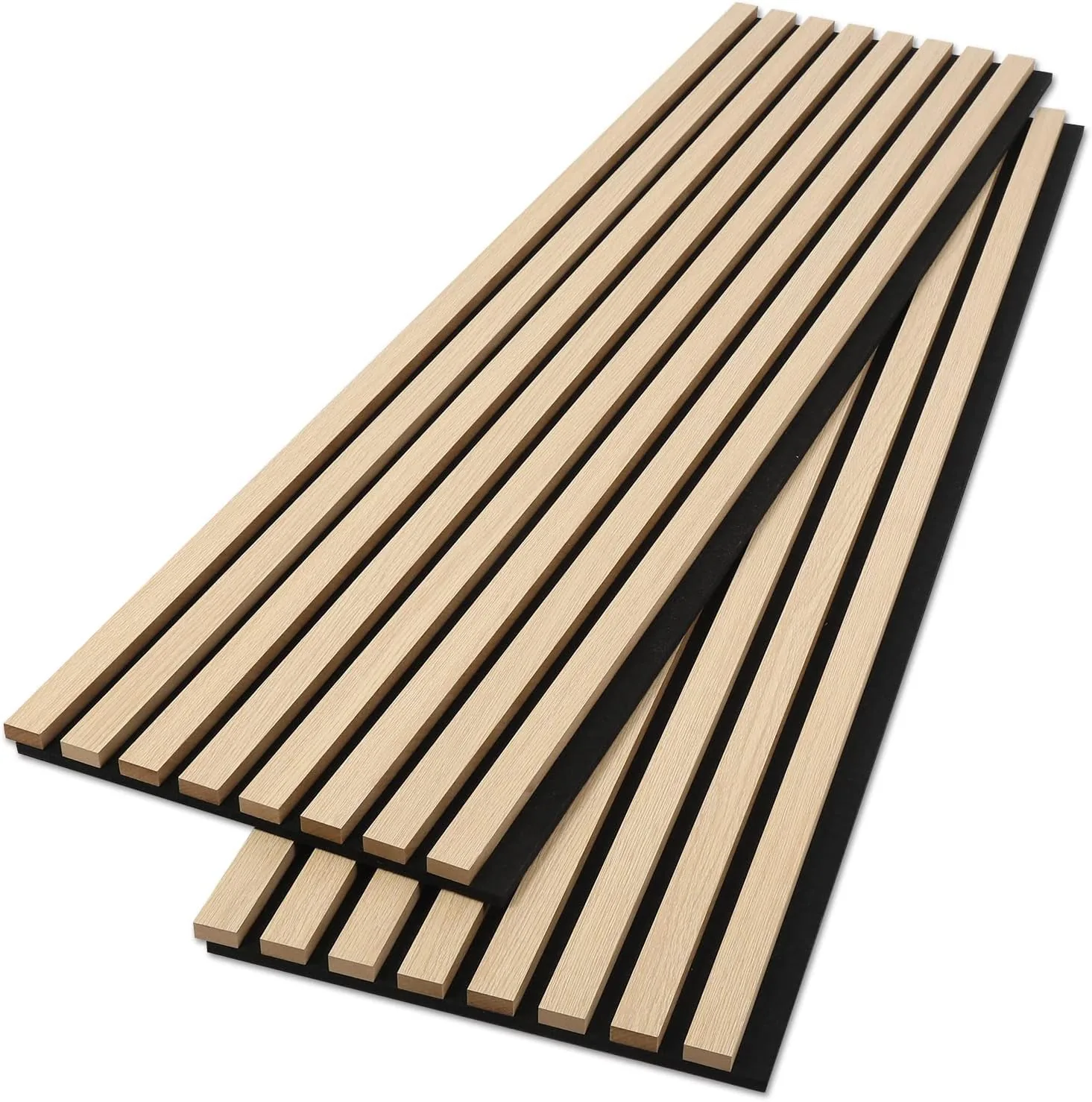
Wood Slats + PET Backing
Decorative slats → PET felt → optional cavity
- Decorative wood or MDF slats attached to PET acoustic backing.
- This construction is separate from a perforated or grooved MDF board.
- Battens, additional absorber and air cavity are included only where specified.
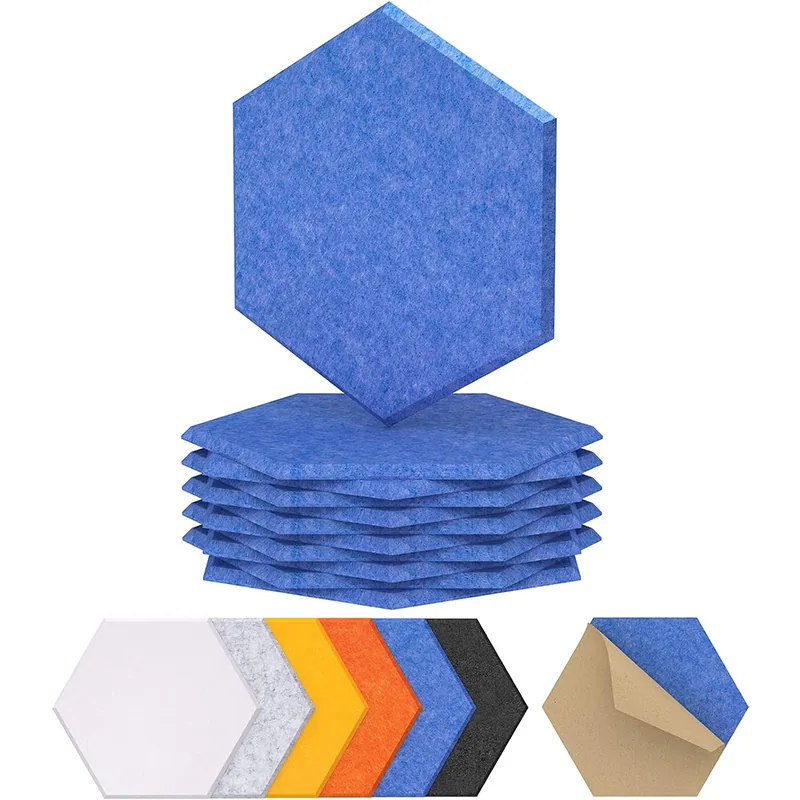
Fabric-Wrapped Panel
Acoustic textile → absorber core → model-specific mounting
- Acoustically suitable fabric wraps an absorptive core.
- Core material, thickness, density and frame design vary by model and supplier.
- Often supplied as modular panels; confirm approved fixing and edge details.
Conceptual layer diagrams—not product photographs, fabrication drawings or a universal layer specification. The perforated face represents one example within the machined-MDF category.
Match Acoustic Data to the Tested Assembly
- Panel rigidity is not structural load-bearing capacity. These are non-load-bearing interior finish products.
- No universal NRC range or frequency ranking. Request the report for the selected model and review its frequency-by-frequency absorption data.
- Verify the complete test configuration: panel face, backing or absorber, cavity depth, mounting method and edge conditions.
- Installation changes can change performance. Clips, adhesive and direct fixing are not interchangeable; follow the selected system’s instructions and the relevant tested arrangement.
Performance, Installation and Maintenance Boundaries
Acoustic Data
Use the test report for the selected model and complete mounting configuration. Confirm the panel face, backing, absorber, cavity depth and fixing arrangement before applying the reported results.
Absorption ≠ Sound Insulation
Absorptive panels can help reduce reverberation within a room. They do not replace partitions, doors, seals or other construction needed to limit sound transmission between spaces.
Installation
Quantity, placement and mounting should be determined by the project designer, acoustic consultant or qualified installer. Confirm substrate suitability and follow the selected product’s installation instructions.
Maintenance & Environment
Check finish-specific cleaning instructions, humidity limits, substrate conditions and replacement requirements. Durability and maintenance depend on the selected finish and model—not a blanket MDF-versus-fabric ranking.
Appearance & cost: Compare physical finish samples and like-for-like project quotations, including the specified backing, fixings, installation and maintenance. Neither material category is universally cheaper or more durable.
Documents to Confirm
- NRC or sound-absorption test report for the selected model and complete tested assembly
- Fire-performance documents covering the applicable components, finish and configuration
- Indoor-emission documents for the relevant product and market, where required
- Model-specific installation instructions, including substrate and fixing requirements
- Finish sample and production-batch confirmation
Office Acoustic Panel Selection Checklist
Project Requirements
Quote Information
Select by Project Requirements
Neither construction is universally better. Select the panel system using verified acoustic data, mounting conditions, maintenance requirements, applicable documents and visual intent.
Fabric-wrapped panels are included here for selection reference, not as confirmation of current COLOMAC supply. Confirm the availability of each selected model—including PET-based or DIY options—and its supporting documents before requesting or accepting a quotation.