
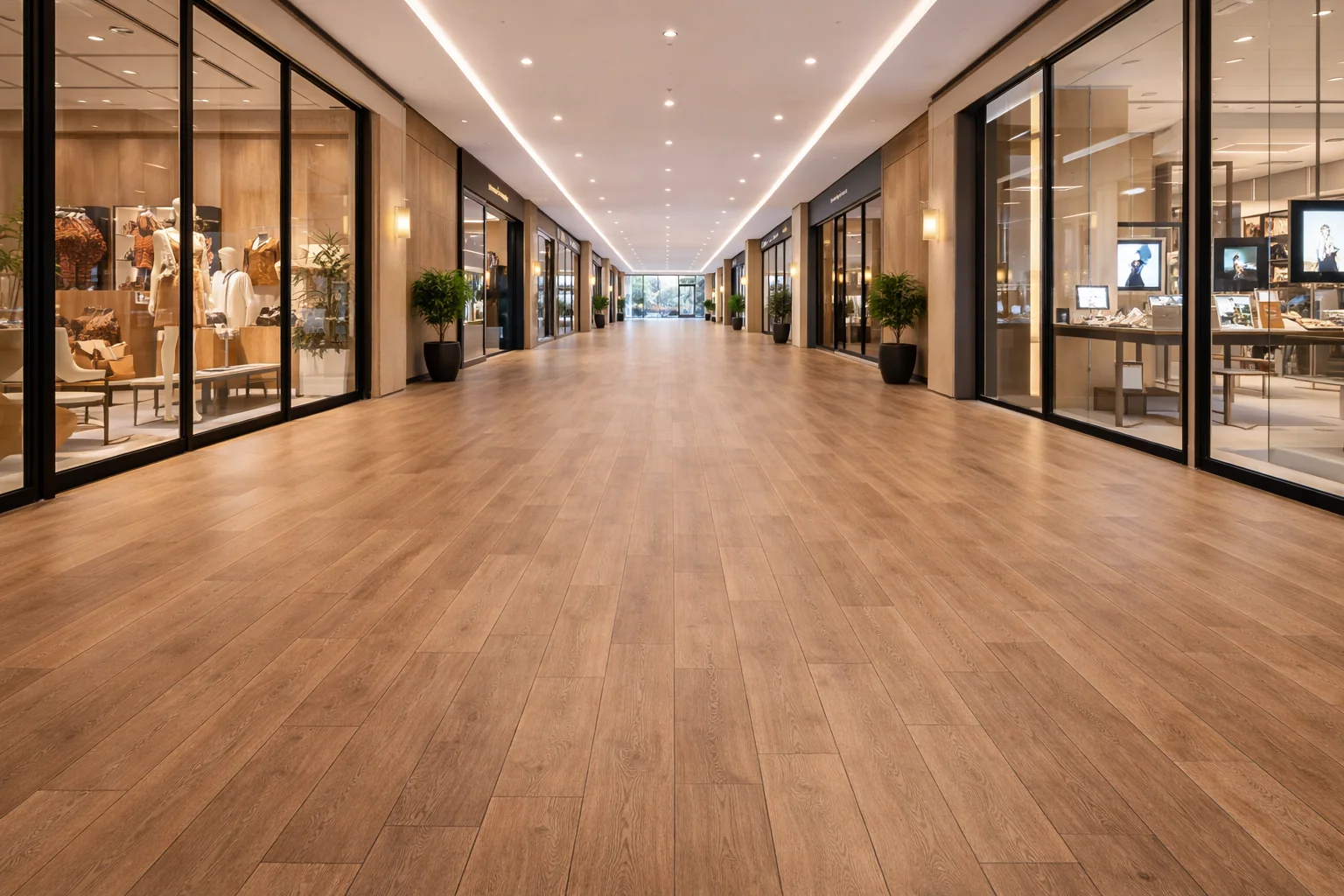
Overview
Specifying flooring for commercial environments — such as retail stores, corporate offices, restaurants, and healthcare facilities — requires materials that can withstand intense daily use while maintaining a professional appearance. Stone Plastic Composite (SPC) flooring has become the go-to resilient flooring solution for these demanding applications.
The Wear Layer: Crucial for Commercial Use
The wear layer is the clear, protective top coating that defends the floor against scratches, stains, and foot traffic. For commercial use, specifications vary by intensity.
- Light Commercial (Small offices, boutiques): Minimum 0.3mm (12 mil) wear layer.
- Heavy Commercial (Supermarkets, busy restaurants, hospitals): Minimum 0.5mm (20 mil) to 0.7mm (28 mil) wear layer.
Rigid Core Thickness
The overall thickness of the SPC plank dictates its stability and locking strength. For commercial applications, a minimum core thickness of 4.0mm to 5.0mm is recommended. Thicker cores provide stronger click-lock joints, which are essential to prevent seams from separating under heavy rolling traffic such as pallet jacks or hospital beds.
Slip Resistance
Safety is paramount in public commercial spaces. Commercial SPC flooring should have a textured surface (often Embossed In Register) that provides adequate traction, even when slightly wet. Look for products that meet commercial slip resistance standards such as R10 rating under DIN 51130.
Key Advantages in Commercial Settings
SPC flooring offers several practical advantages for commercial projects.
- Zero Acclimation Time: SPC requires no acclimation before installation, allowing immediate use upon delivery.
- Install Over Existing Floors: SPC can often be installed directly over existing hard surfaces without extensive demolition.
- 100% Waterproof: Ideal for restaurants, cafes, and healthcare settings where spills and frequent mopping are daily occurrences.