Introduction
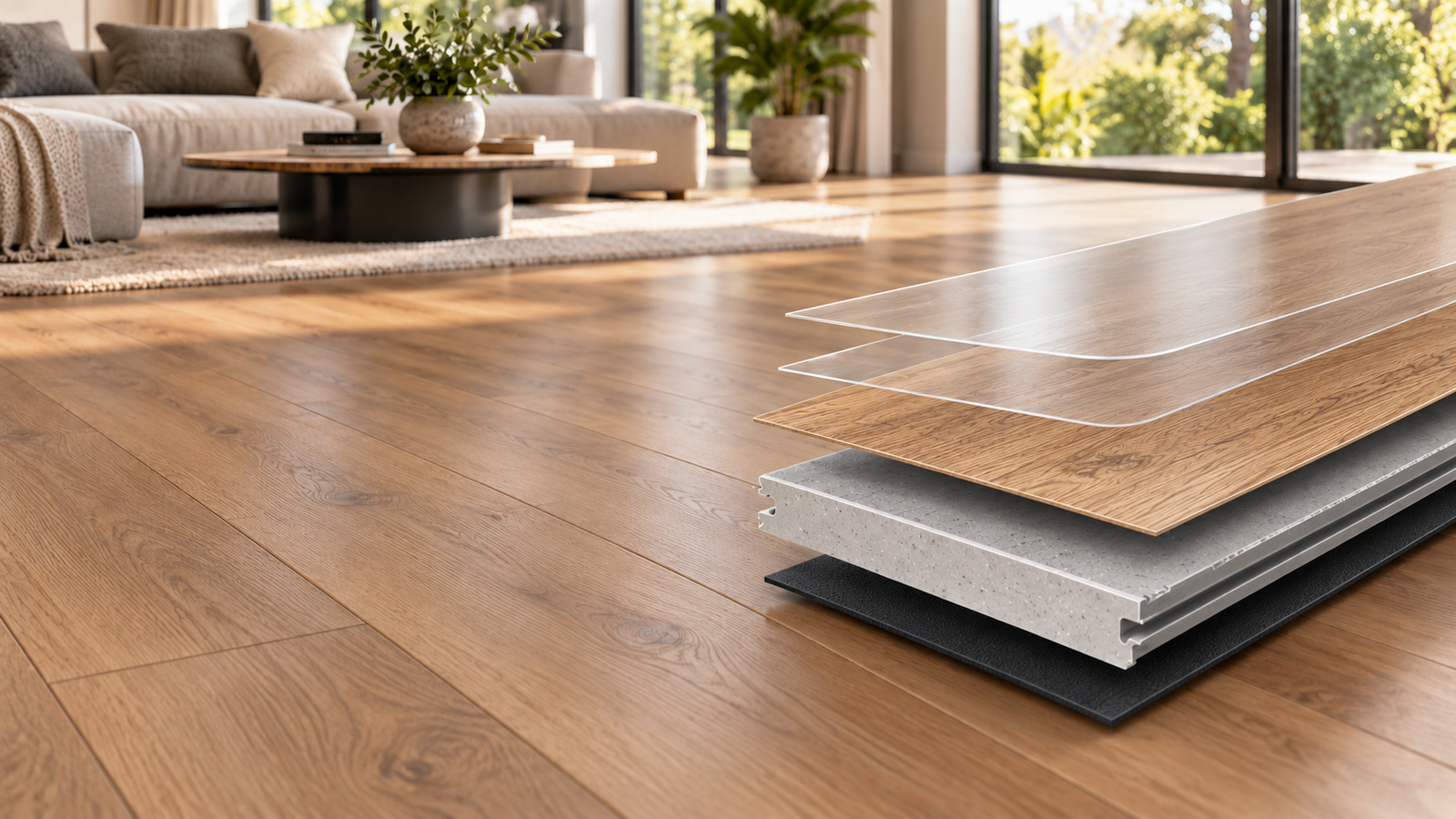
SPC flooring typically combines a mineral-filled PVC rigid core with a decorative film, protective wear layer and optional attached underlay. Final performance and suitability depend on the complete product specification and installation conditions, not the core material alone.
What Does SPC Stand For?
SPC stands for Stone Plastic Composite. In this article, it refers to rigid-core interior flooring with a mineral-filled PVC core. Many models use click-lock joints, but joint design, backing and installation requirements must be confirmed for the selected product.
How SPC Flooring Is Constructed
SPC flooring typically includes the layers below. Final construction varies by model: confirm the technical data sheet, profile drawing and installation instructions before ordering.
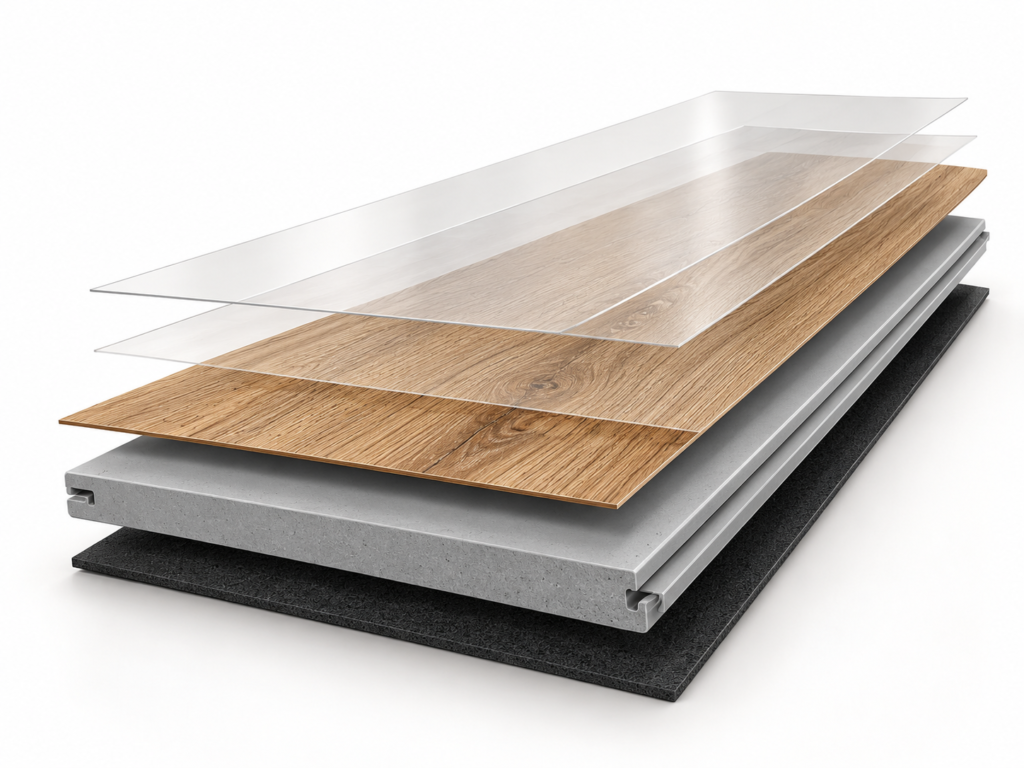
Typical layer sequence
- 01UV coating — model dependent
- 02Wear layer — thickness by model
- 03Decorative film
- 04SPC rigid core
- 05Attached underlay — optional
Profile & Surface Details
Confirm texture and finish against the selected sample.
Edge treatment varies by model; verify the profile drawing.
Confirm joint design, installation requirements and compatible accessories. Do not mix incompatible profiles.
| Layer | Primary Role | What Buyers Should Confirm |
|---|---|---|
| UV coating, where specified | Surface protection | Coating system and applicable test documentation. A UV-cured coating is not by itself proof of resistance to sunlight or chemicals. |
| Wear layer | Abrasion protection | Actual thickness and relevant product classification or test method for the selected model. Do not assume a universal thickness range. |
| Decorative film | Visual design | Pattern, color, print batch and finish sample. |
| SPC rigid core | Rigidity and dimensional support | Overall thickness, formulation or density where supplied, and applicable dimensional-stability and indentation test data. Not a load-bearing building structure. |
| Attached underlay — optional | Cushioning and acoustic contribution | Material, thickness, approved installation build-up and compatibility. IXPE or cork is not standard on every model; acoustic results depend on the tested assembly. |
Performance Depends on the Complete Flooring System
Moisture
Core water resistance does not make the installed floor waterproof. Joints, perimeter gaps and the substrate can still admit moisture; confirm the product’s approved applications.
Surface Wear
Commercial suitability depends on the selected wear layer, coating, use classification and applicable abrasion, locking and other test results—not on the SPC label alone.
Dimensional Stability
Confirm model-specific dimensional-stability data, room conditions, temperature limits and movement allowances. Do not assume all rigid-core floors behave identically.
Underfloor Heating
Use only an explicitly approved model and heating system. Follow the stated heating type, maximum surface temperature, controls and gradual start-up procedure in the manufacturer’s instructions.
Do not treat flooring as a substitute for required substrate waterproofing or moisture control.
Installation Conditions to Confirm
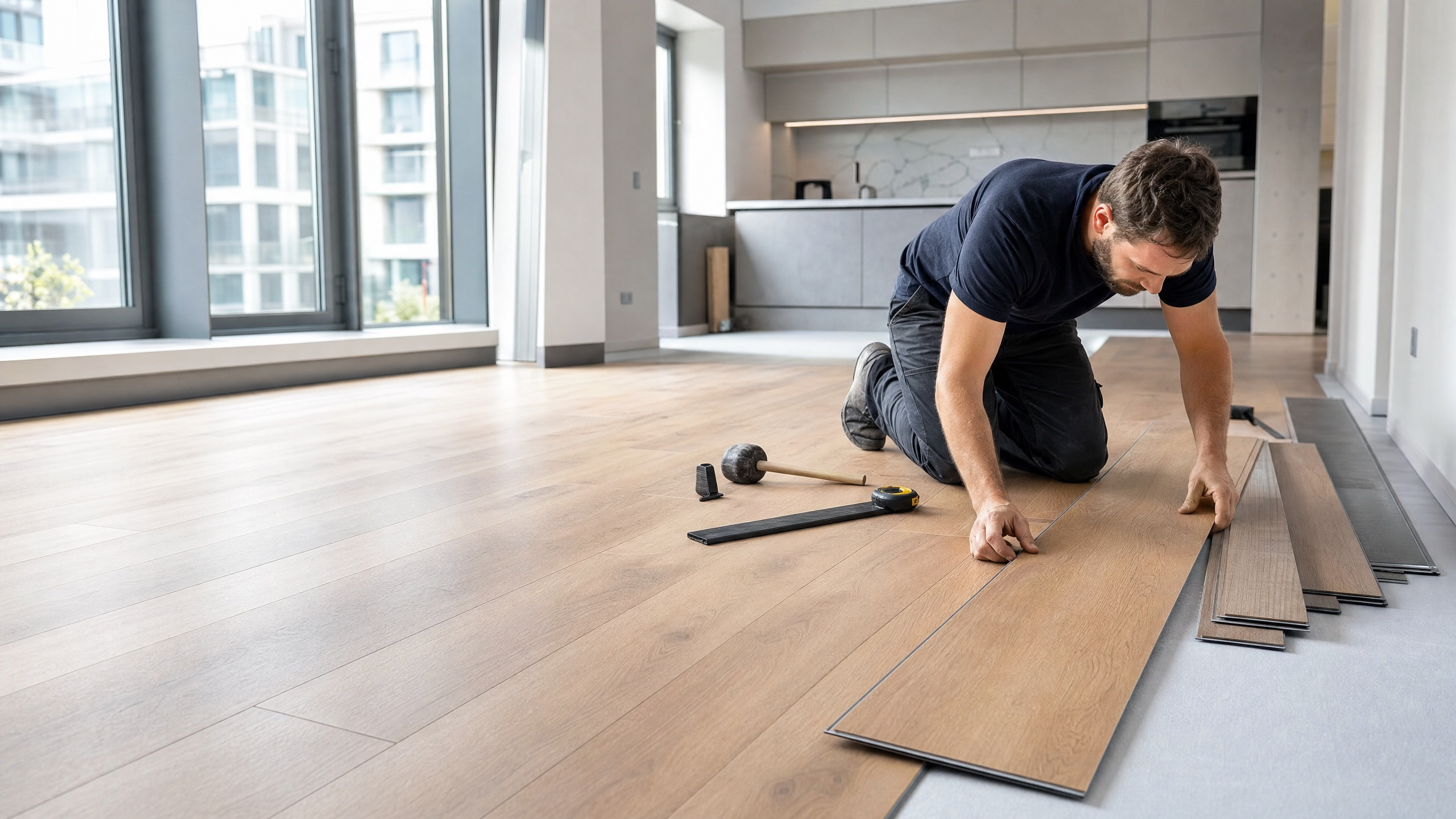
- Flat, dry and sound subfloor
Confirm flatness, stability and preparation against the model instructions.
- Subfloor moisture test
Use the required test method and limits for the substrate and flooring.
- Model-specific expansion gaps
Confirm perimeter and transition requirements; no universal gap is specified here.
- Room and material temperature
Follow storage, acclimation and installation limits for the selected model.
- Approved underlay combination
Confirm compatibility; do not add extra underlay unless explicitly approved.
- Fixed cabinetry and perimeter details
Confirm sequencing and details so fixed fittings do not restrict required movement.
Application / Verify Before Specifying
| Application | Key Points to Verify |
|---|---|
| Kitchens | Product approval, joint protection, perimeter details, moisture management and cleaning method. |
| Bathrooms or wet areas | Explicit product approval, applicable local requirements, substrate waterproofing and wet-area details. Core water resistance alone is insufficient. |
| Commercial spaces | Use classification, intended traffic and loads, wear performance and relevant abrasion and locking tests. |
| Healthcare / education | Project-specific VOC or emissions, cleaning, slip, fire and other requirements; no blanket suitability claim. |
| Renovation over existing floor | Flatness, stability, height, moisture and compatibility of the existing finish. Installation over an old floor is not automatically permitted. |
SPC Flooring Specification Checklist
Confirm the selected model’s specifications before enquiry. SPC rigid-core flooring should be selected as a complete product and installation system.
- Overall thickness
- Wear-layer thickness
- Plank dimensions
- Core density, where specified
- Click-lock profile
- Attached underlay, if required
- Surface texture and gloss
- Edge treatment
- Packing quantity
- MOQ and production lead time
SPC vs LVT: Quick Selection
This comparison uses LVT to mean flexible vinyl flooring; product terminology varies between suppliers.
| Item | SPC | Flexible LVT |
|---|---|---|
| Core | Rigid mineral-filled PVC composite | Flexible vinyl construction |
| Installation | Commonly click-lock; confirm model | Glue-down or click-lock, depending on model |
| Selection focus | Core specification, locking system, wear layer and installation limits | Installation method, flexibility, wear layer and adhesive requirements where applicable |
| Subfloor | Both require a suitable, prepared substrate and model-specific installation conditions. | |
Documents to Verify
Use only documents applicable to the selected model, installation configuration and destination market.
- Technical data sheet
- Abrasion & dimensional stability
- Locking strength
- Slip & fire performance
- VOC / emissions
- Installation & maintenance